

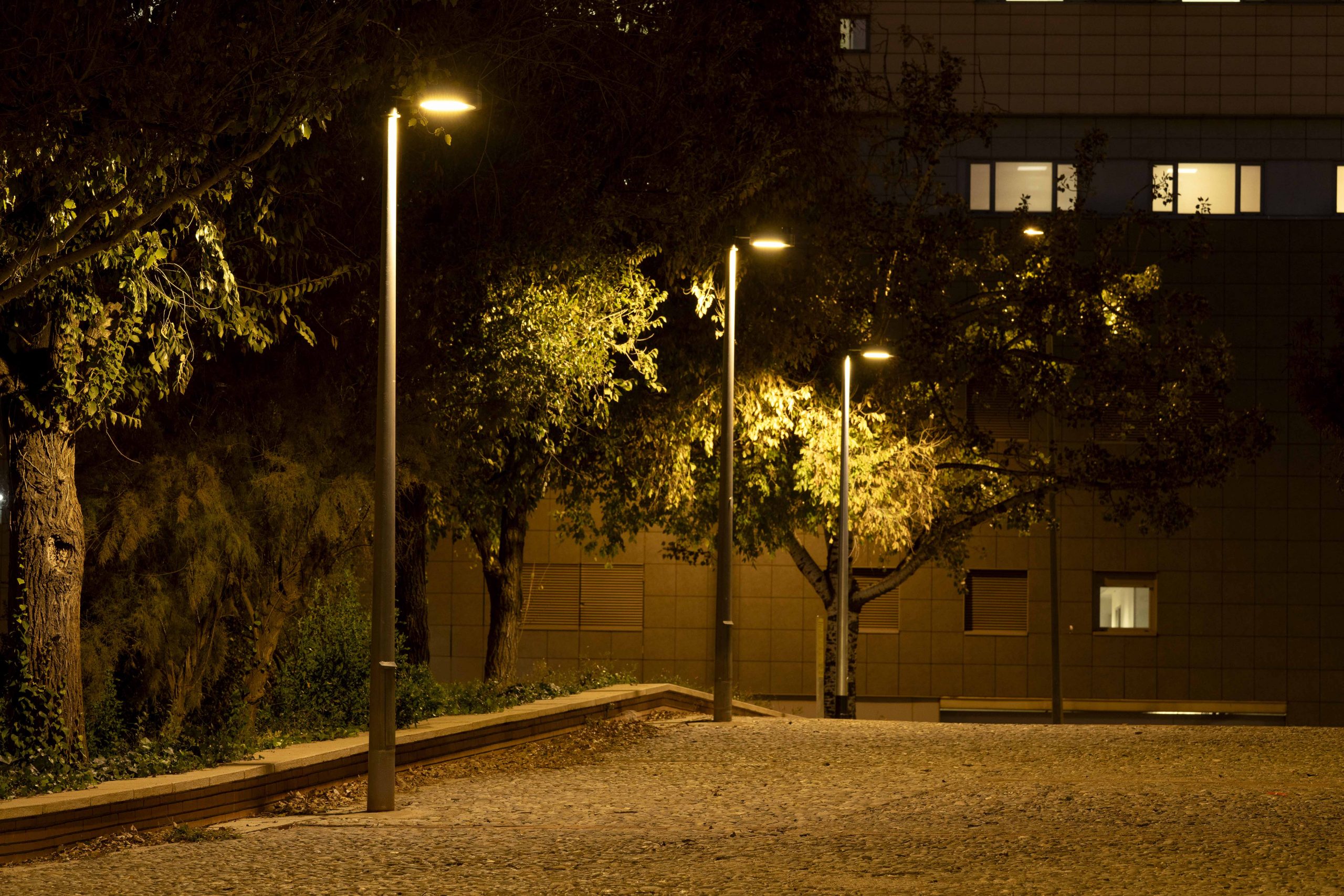
Parc del Molinet is an urban park inaugurated in 1989, located in Santa Coloma de Gramenet, Barcelona (Spain). It functions as a viewpoint with views over the Besòs river, Barcelona and the Collserola mountain range, and covers an approximate area of 25,000 m². It features extensive green areas and spaces for leisure and sport, including children’s play areas, a dog park and picnic areas. In recent years, several improvements have been implemented to strengthen accessibility, sustainability and lighting, consolidating it as a quiet, versatile space highly valued by local residents.
A PILOT PHASE THAT SET THE DIRECTION OF THE PROJECT
As part of these improvements, Parc del Molinet hosted a pilot programme in 2021, promoted by the Catalonia Lighting Cluster, CICAT, and the Barcelona Metropolitan Area, AMB. The objective was to test, under real conditions, a lighting model capable of adapting to how the space is used, combining dimming with dynamic adjustment of colour temperature. After several trials, the programme validated a system based on presence sensors and programmed scenes, which automatically adjusts the lighting according to the activity detected in each area.
FROM LEARNING TO FULL IMPLEMENTATION
Following the success of the pilot programme, AMB promoted, at the beginning of this year, the renewal of the lighting at Parc del Molinet through a dynamic lighting system, with the aim of matching light levels to real use of the space. The intervention involved replacing Carandini’s PRQ luminaires, installed 37 years ago and still in operation, with three main objectives, reducing energy consumption, addressing the obsolescence of high-pressure sodium lamps, which are in the process of being phased out, and improving lighting performance that, in today’s context, was clearly insufficient.
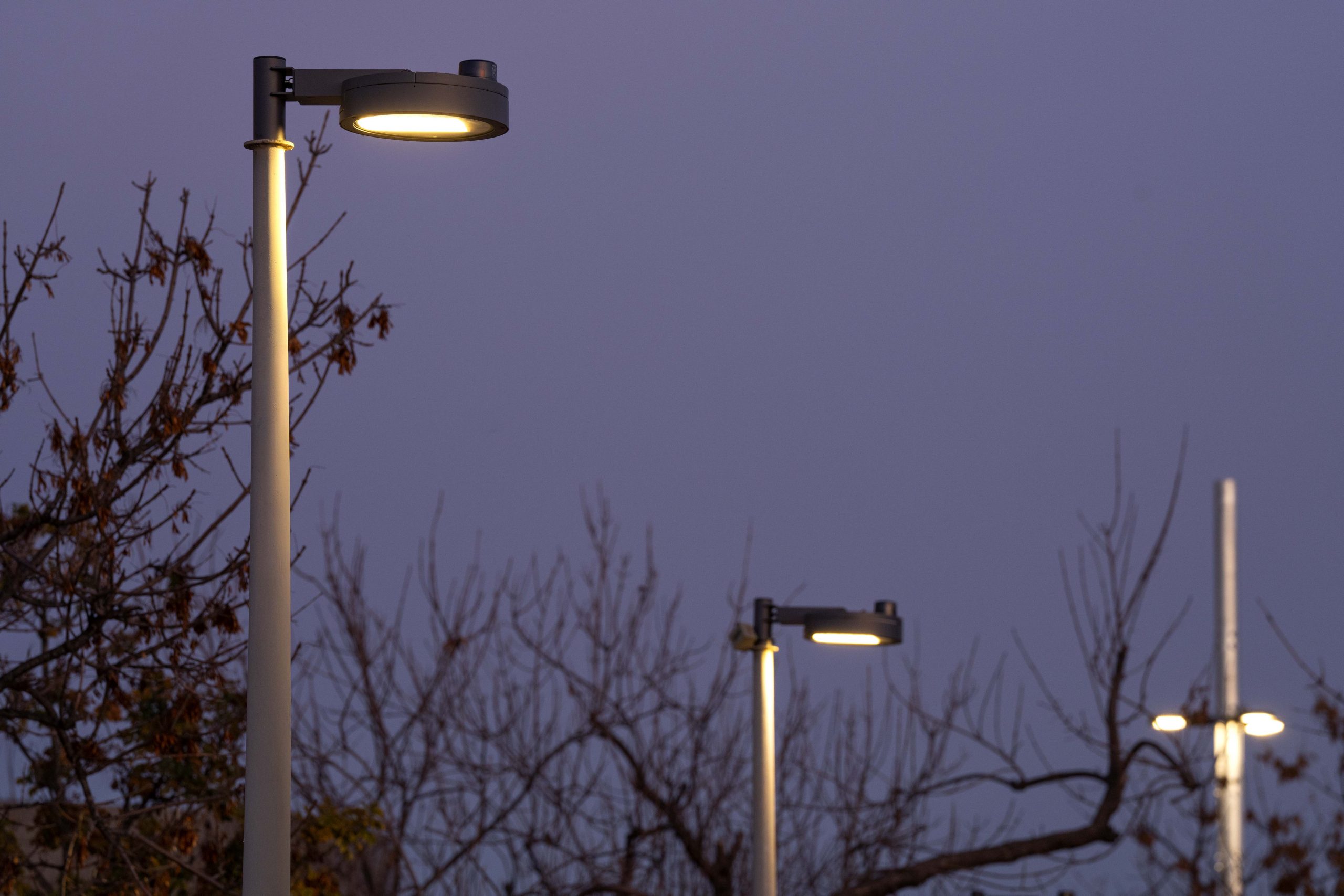
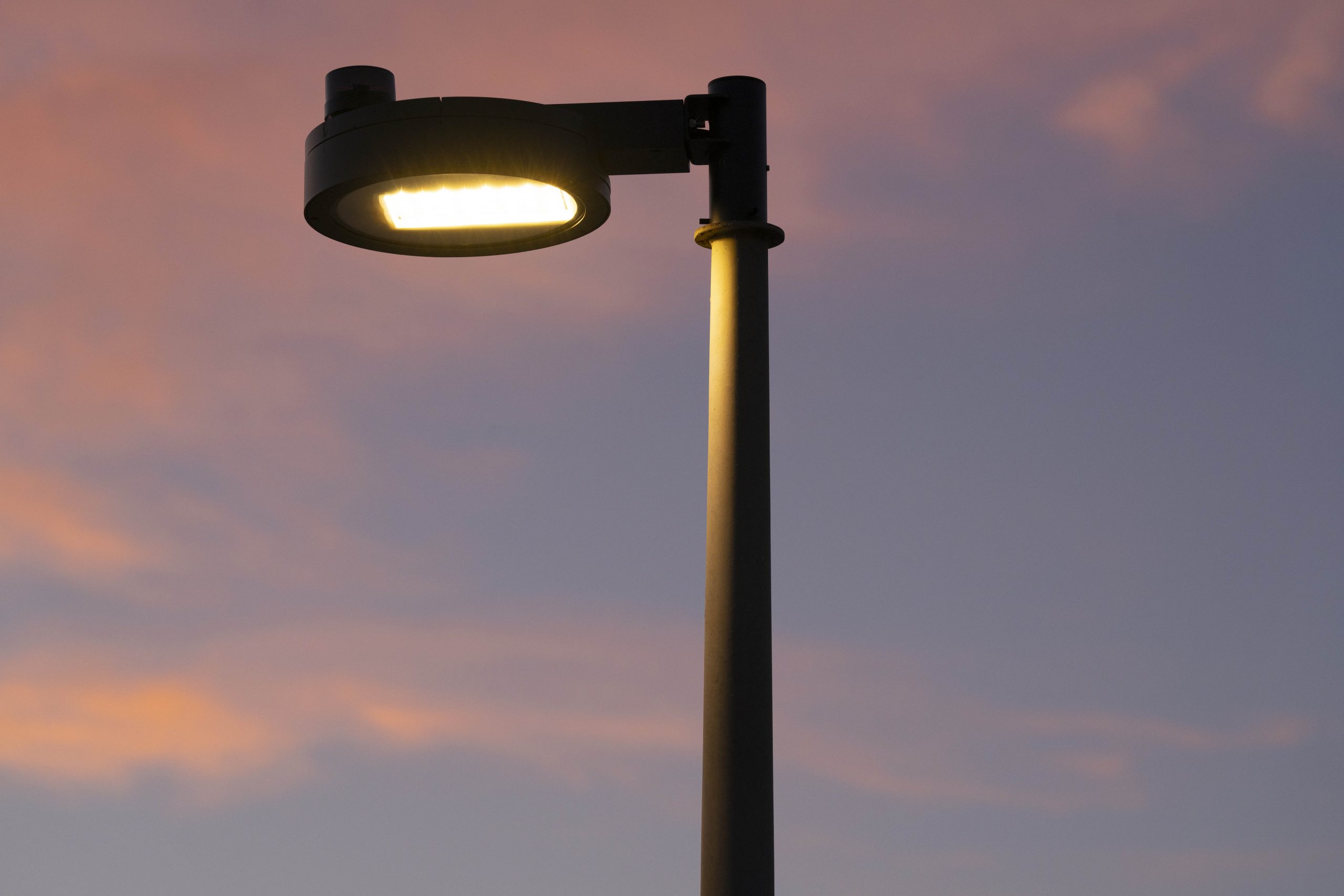
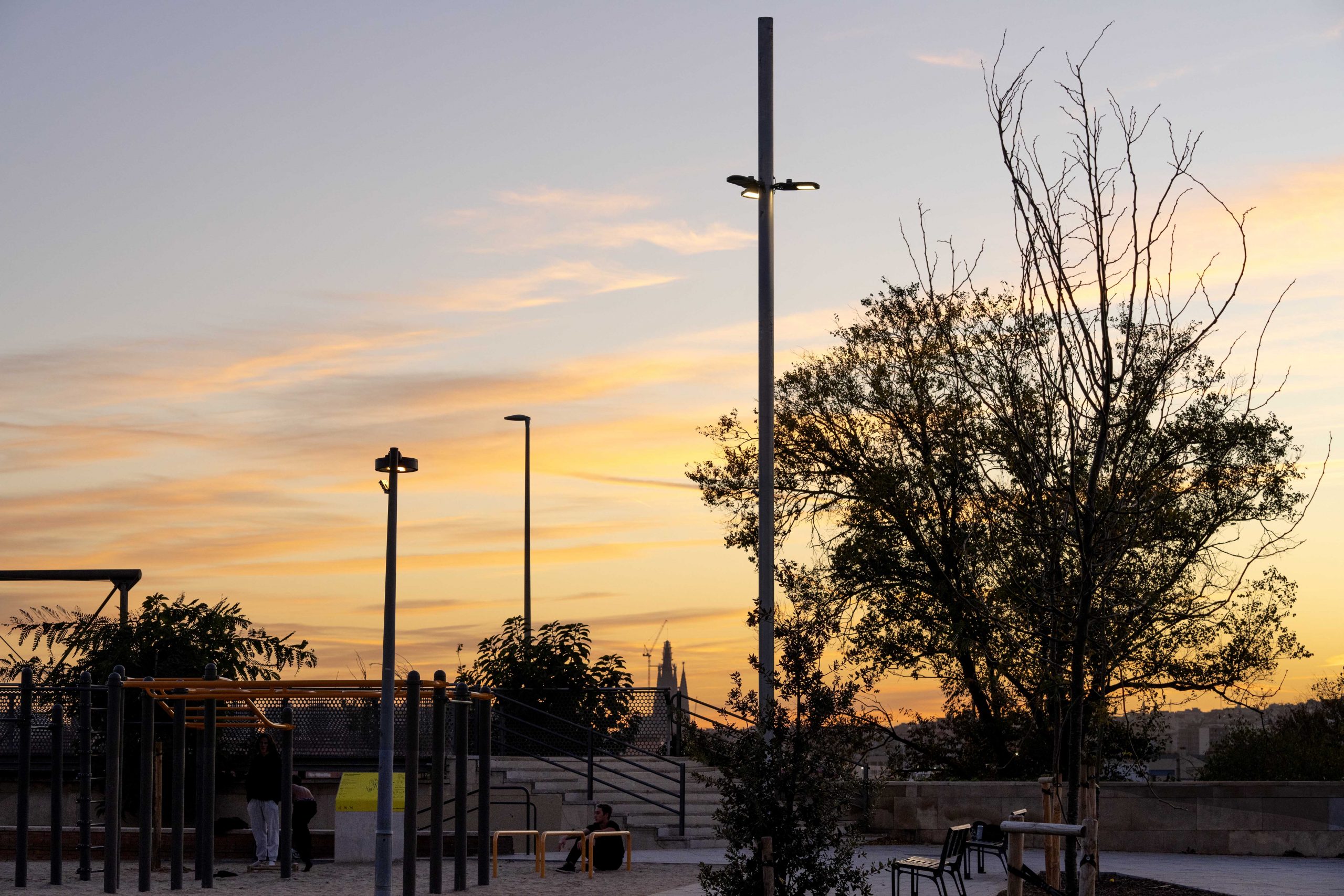
To achieve these objectives, Carandini’s Spin, HFL and Mikos solutions were selected. Each luminaire type was chosen according to the specific needs of each area of the park. Mikos projectors on columns were installed at the entrances, HFL luminaires were installed under the pergola, and Spin, the ambient luminaire, was used across the remaining areas. All of them are compatible with Dynamic White, a system that allows both light level and colour temperature to be adjusted according to activity, time period and the requirements of each area of the park.
From a life cycle perspective, the solution is based on a modular architecture compatible with open standards such as Zhaga, which facilitates maintenance, technology upgrades and future adaptation to new requirements.
ONE PARK, MULTIPLE USES, MULTIPLE SCENARIOS
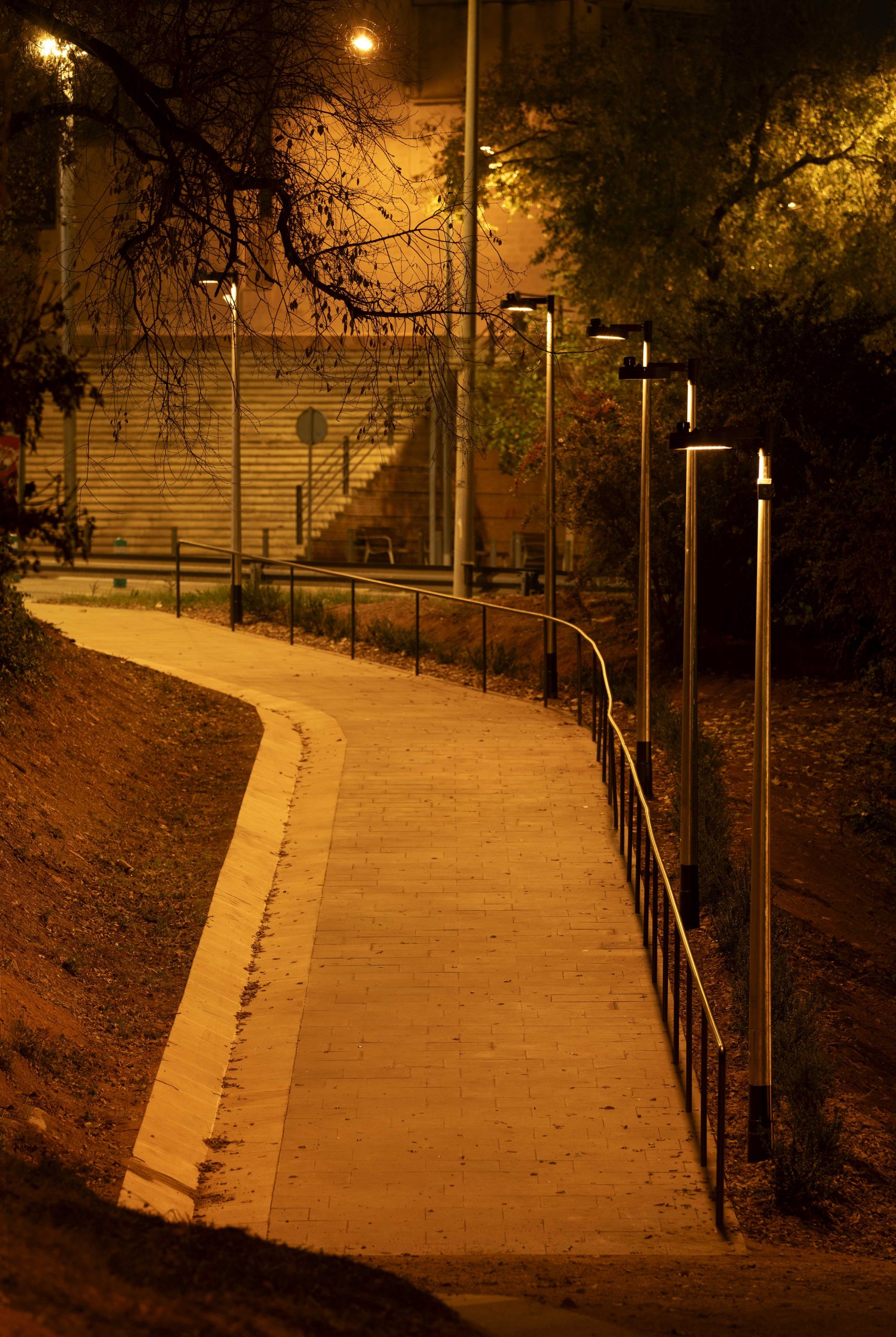
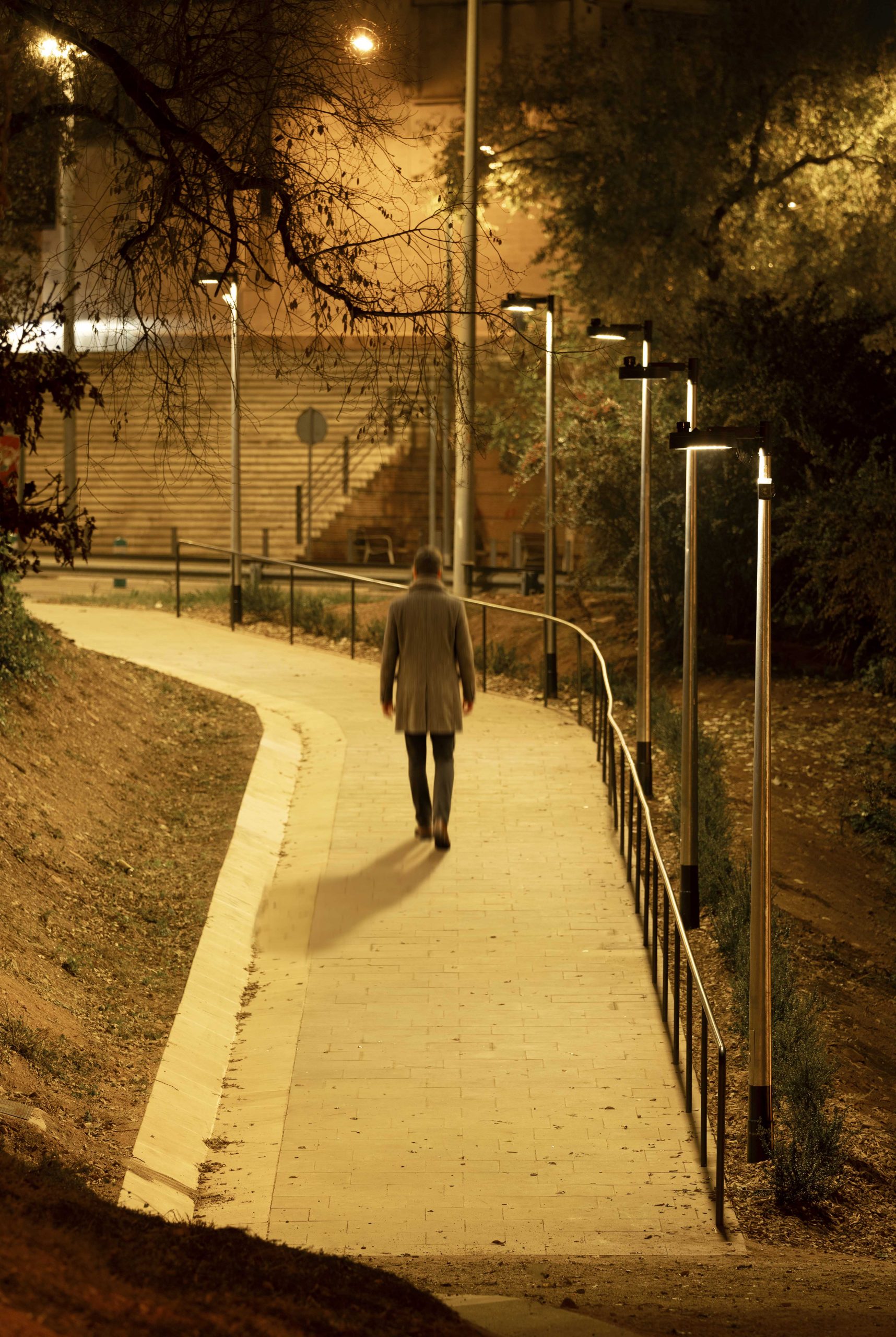
The project started from a clear idea; an urban park cannot be treated as a homogeneous lighting environment. For this reason, the site was divided into five areas, walking routes, the dog park, entrances, the pergola, and play and sports areas. Tailored lighting scenes were defined for each area, based on its use and environmental context.
This zoning made it possible to apply a dual criterion, adaptive lighting to ensure that each area is lit according to activity and the time of night, and non-dynamic operation at the entrances, to support the clear identification of access points and enhance safety from outside the park.
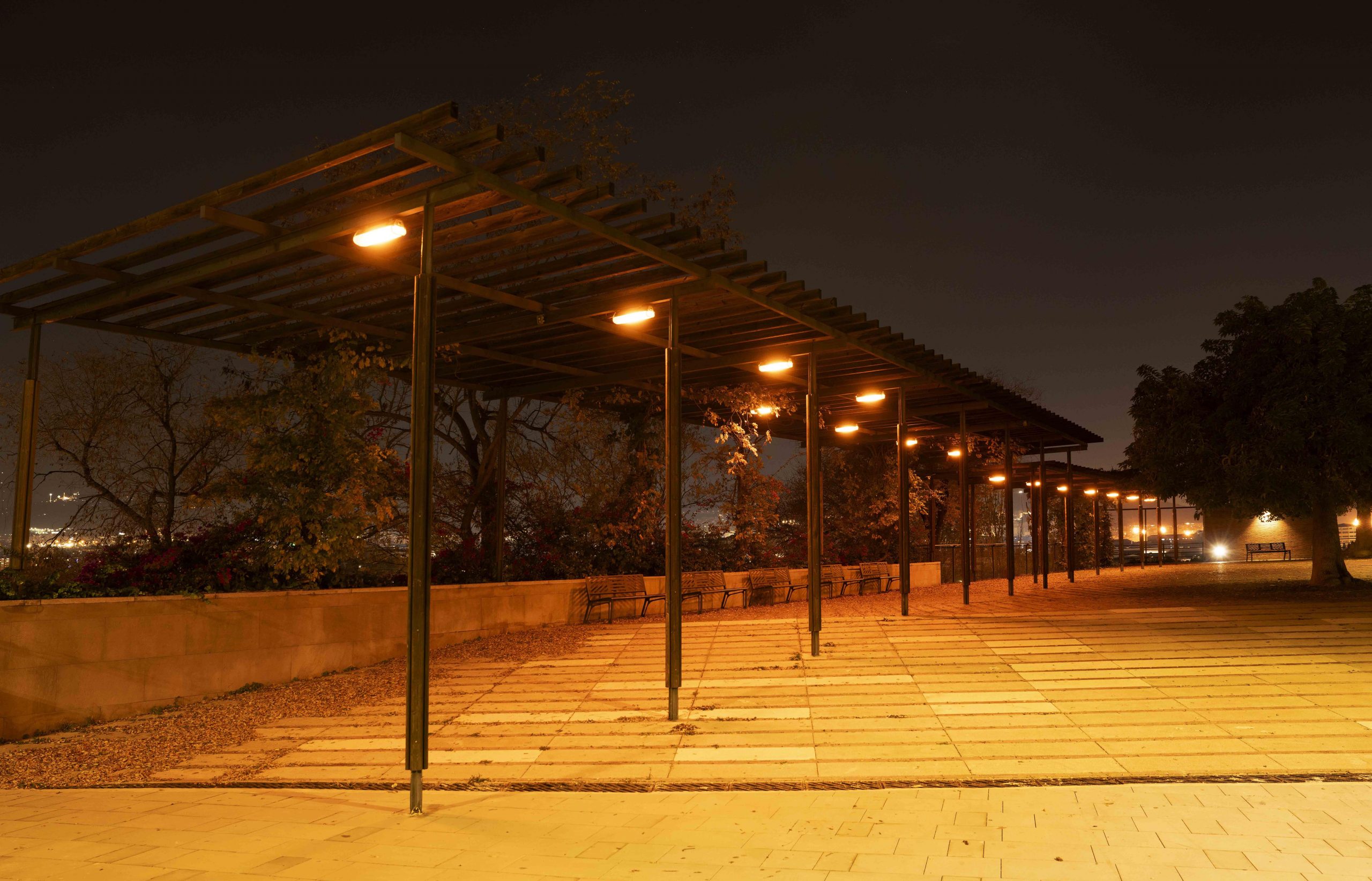
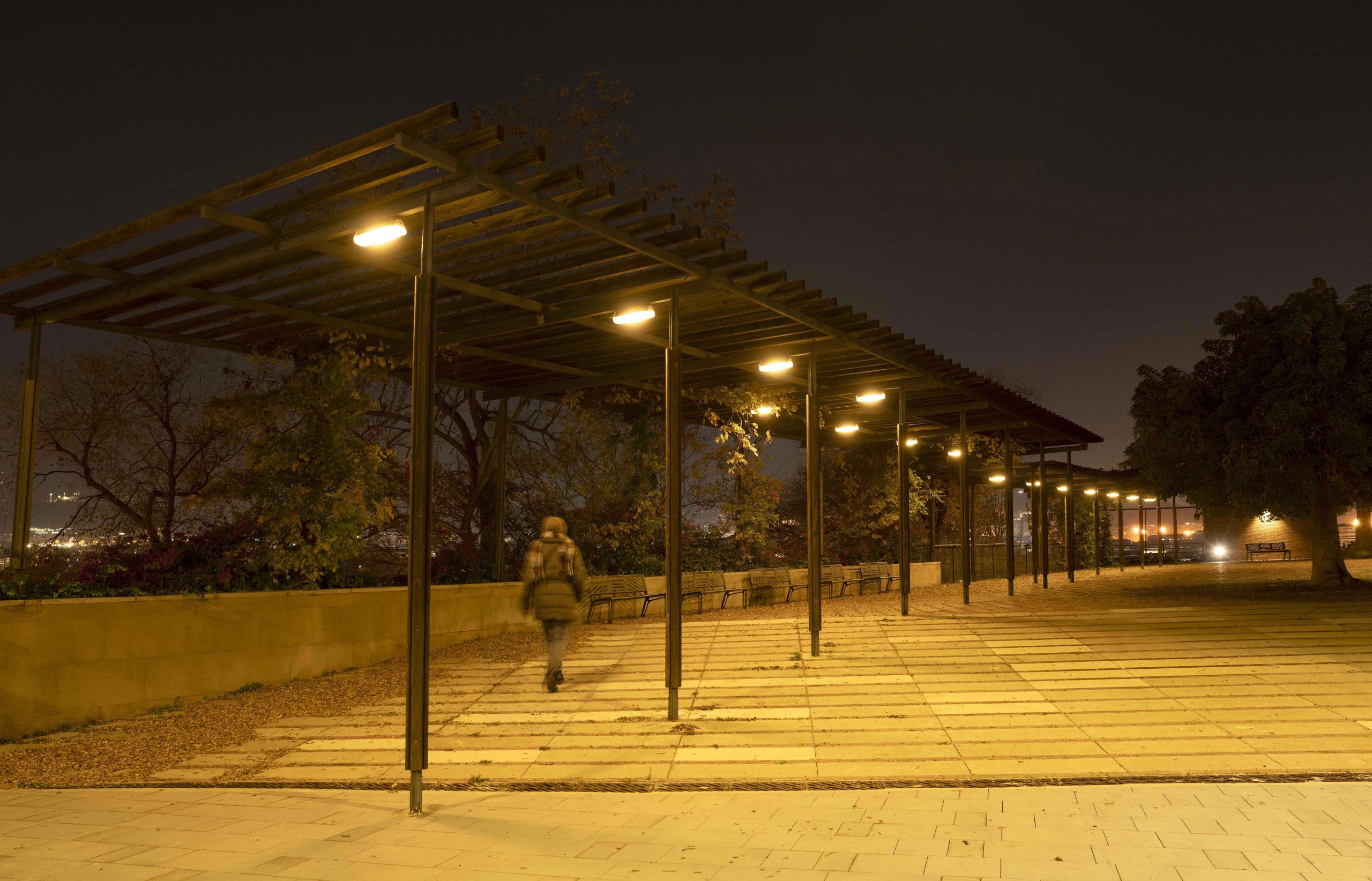
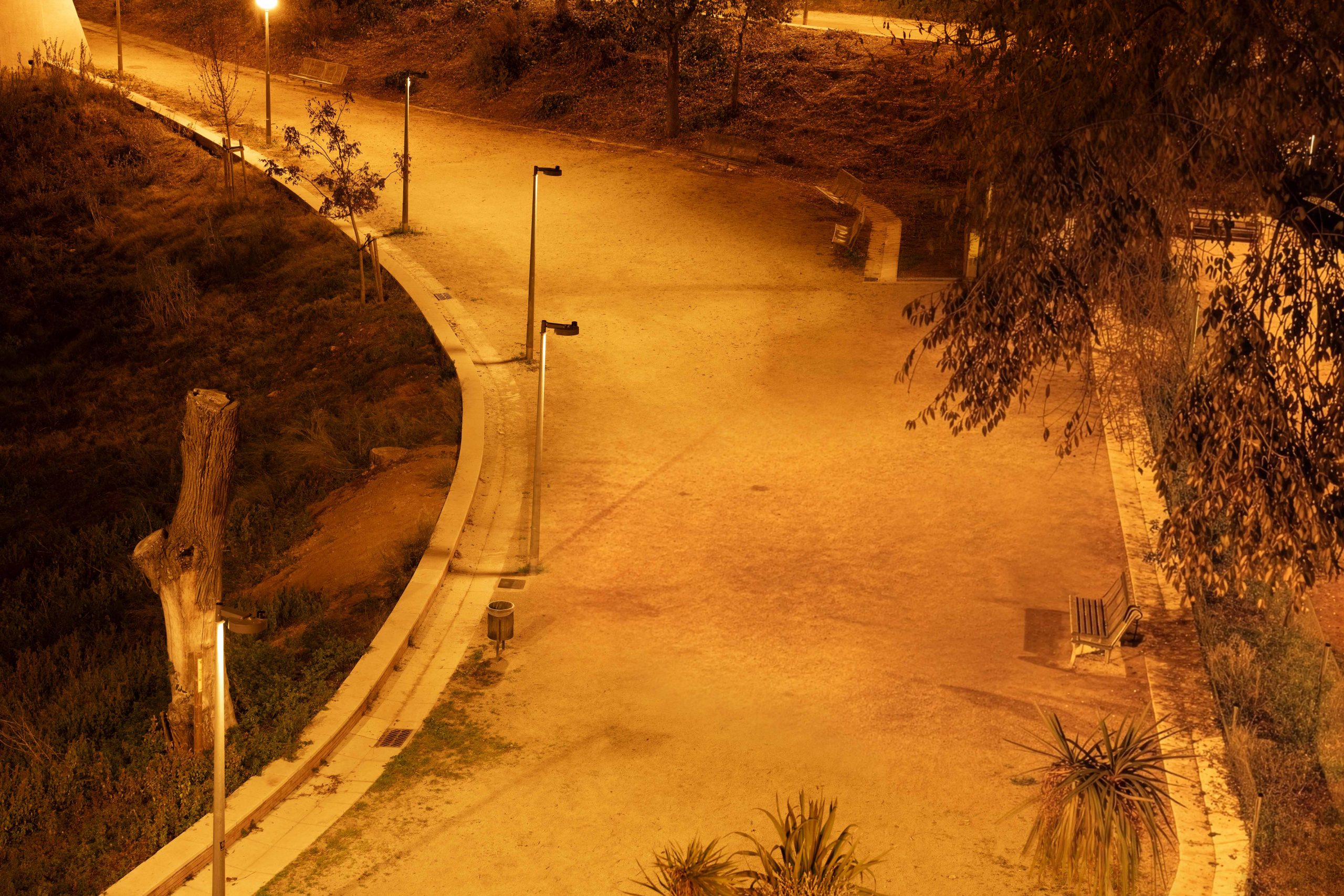
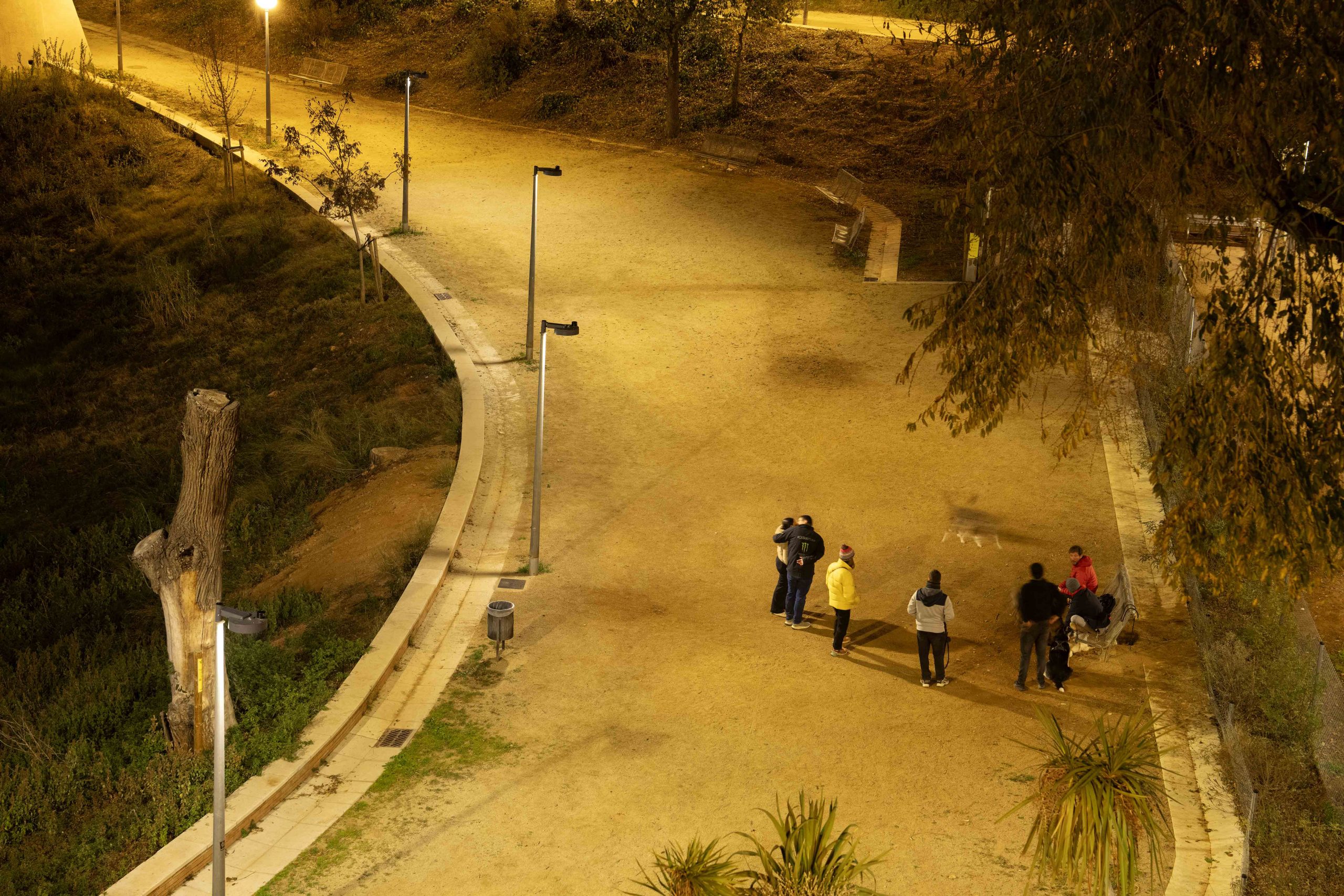
In the areas with adaptive lighting, the system automatically adjusts lighting parameters based on data from the presence sensors. When no activity is detected, it operates at reduced levels and with an amber colour temperature under the pergola, and 2200 K across the rest of the park, minimising the blue component and limiting impact on biodiversity. When movement is detected, the system progressively increases the light level and adjusts the colour temperature to 3000 K, improving safety and visibility.
FROM LIGHTING CALCULATIONS TO ADAPTIVE CONTROL
Levels and scenes were defined through lighting studies carried out by Carandini’s specialist team, to ensure visibility, uniformity and visual comfort in each area of the park. This work translated zoning into specific lighting requirements, establishing target levels by area and the transitions needed to avoid abrupt changes, over lighting and glare.
Subsequently, the smart lighting team configured the system so that dimming and colour temperature adjustment follow the strategy defined for each area, responding to presence and the nocturnal context through parameterised scenes and transitions.
A REPLICABLE MODEL FOR OTHER MUNICIPALITIES
The Parc del Molinet project shows that adaptive lighting and the Human Centric Lighting approach can be successfully integrated into real public lighting interventions. Beyond technology, the value of the project lies in its methodological approach, analysis of actual space use, definition of coherent scenarios, and application of technical solutions that are available and maintainable.
This approach makes it a replicable model for other municipalities seeking to move towards public spaces that are more efficient, comfortable and respectful of the environment, incorporating adaptive lighting as a standard part of urban design.
SPIN
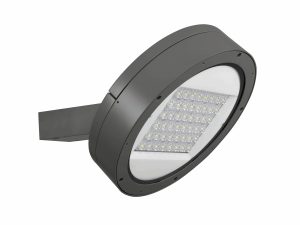
The SPIN luminaire is characterised by a balanced silhouette and an elegant and aesthetic design. It has quick connectors and a tool-free opening system for quick and easy installation and maintenance. It is certified with the Dark Sky label, which certifies that the luminaire complies with dark sky protection.
MIKOS
Mikos is the new lighting concept by Carandini that has been designed for all types of urban spaces.


HFL
The HFL luminaire features high performance LEDs which, combined with the carefully engineered housing design, deliver high quality lighting with excellent uniformity. Ideal for urban and industrial environments.